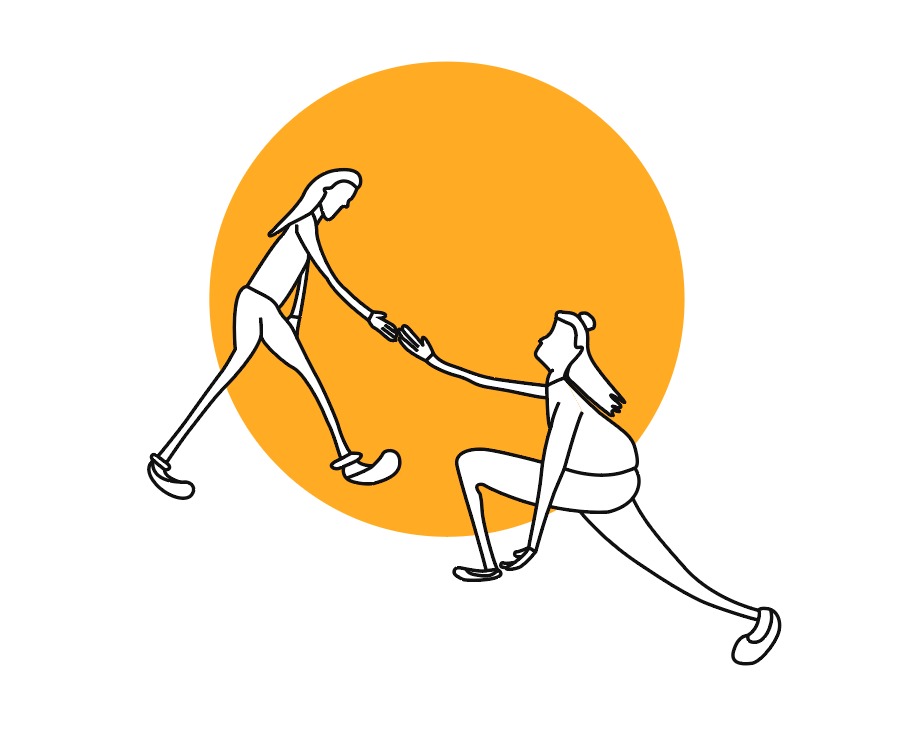
Caring for and caring for the expansion of who you care for is not the same.
Mama and baby elephant were on the bridge over the river, and the mama elephant heard the baby scream. She turned back to find the baby standing at the weary end, frozen.
Evading the scary thoughts of baby falling in the river current, the mother elephant stepped towards him. “What’s the matter, my child?” she asked.
“I saw my lost friend in the river, and I will not move without taking him,” the baby elephant replied with worry.
The elder elephant controlled her grin of awe, assessed the river current, and pushed the baby towards the safe side.
Feeling frustrated, the young elephant raced off to the riverside trail without listening to his mother’s words. “I’ll find him, whatsoever,” he thought to himself.
Later in the day, the young elephant returned to the elder who was waiting for him and began to complain, “I followed the river and spent two hours searching for my lost friend today. What have you done? Nothing? Perhaps you don’t care at all.”
Unphased, the beloved parent looked at the young elephant, said nothing, and kept her gaze sharp at the river’s bank where animals were drinking water. Again, the angry young elephant strode off to another side to find his lost friend.
After another few hours, as the young elephant returned, tired and worn, he saw the parent elephant still in the same spot. However, something had changed — his friend elephant is ogling along.
Astonished, the baby elephant asked, “How did you do that? How did you find him?” With care and compassion, the parent elephant finally responded, “I did not run behind the shadow.”
I did not run behind the shadow.
Isn’t it that most of us behave like the child elephant. It comes naturally. It feels right to live by the WYSIWYG principle, aka. What you see is what you get. This principle works differently in different contexts, like web user interface design or as the law of attraction.
Everyone has moments of self-criticism and self-doubt, whether one is the most hardworking person in every room, the most assertive, or both. For me, it works like this, most of the time… I expect my efforts to double up with who I care about — family, work, and relationships. It took many lessons to smack on the face to learn that caring for and caring deliberately for the expansion of who you care for is not the same. It is life long practice.
The process is simple but not easy. Especially when society accredits hard work, the human race is shifting to more and more rational thinking, leading to individualism.
A significant percentage of the power positions (leaders, managers, parents) grapple with the protector epidemic. We feel pride when we can protect and rescue. We fancy creating the world for the child that we wished for. We feel a sense of usefulness when we run behind shadows, like the baby elephant.
We are good at silencing the inside voice who speaks that the ideal world is a delusion, and if silencing doesn’t work, we turn our ears to another voice coming from a shiny mirage.
We’re so preoccupied with protecting children from disappointment and discomfort that we’re inadvertently excusing them from growing up ~ LZ Granderson.
Care is not the protection. It is being present to what to care about. A leader’s/parent’s best gift to the colleague/ child is resilience and perseverance in their character. With that as a common ground, their relationship can survive any hardship and will only expand.
We need to ask ourselves what is important to us — to be the one who is always needed or partner to the character leading expansion?
Caring with intention is powerful. As unbelievable as this may sound, the humans that inhabited the Earth thousands of years ago were better caretakers. They did not just eat bananas or swing from one tree to the next. They lived the life of intention. They knew when to fight and when to let go of the urge and sit in peace.
Now, with all positive intent of rational mind, you may say that “how much do you know me? I have my story. From childhood. From betrayal. From dreams.”
I hear you! I know you had a bitter or tangy experience, which made you who you are. This struggle has existed in various forms throughout history in each one of us. The same question – we intend to lead and parent by design or default?
To see that reality clearly and live by design, we often need help because we are good at fooling ourselves.
I have noticed many of us using affirmations/ positive scripts like “It’s okay to be upset.” or “I am confident and strong.” Don’t get me wrong. I am not condemning the scripts. These scripts have their place; these protect us because of their association with the reptilian brain. Still, scripts aren’t the entire story. I would never attempt these affirmations with my daughters; they are smart and will immediately catch the incongruence of my words and expressions. Words beget words only, no actions. Words are such a poor veil to the intentions.
Indeed, the meaning of “intentions” is different for different people. Some people set intentions as they set the goals, while others set intentions more like guiding principles. Everyone’s process of finding what works for them is unique and personal.
For me, the “intentions” mean: what matters in the long term. I care for strengthening the character. Future is not promised to anyone. Time has tested our inner resolve and will examine our future generation as well.
Future is not promised to anyone. Time has tested our inner resolve and will examine our future generation as well.
When it comes to people/relations/work I care for, all that matters is health, happiness, well-being, the strength of character, and the ability to withstand turbulent situations. I am sure, if we do a mind-mapping exercise of our intentions for our children, their friends, and their friends’ friends, we all will get similar maps.
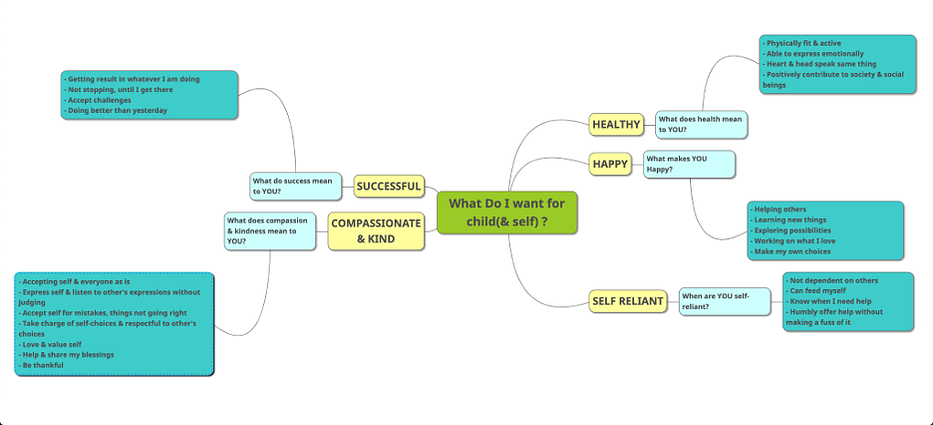
the “intentions” map created by the author
Once the “intentions” map is created, the leader/ parent can act better, like:
- Would my action make them empowered or entitled if I rescue them now?
- Will they grow as an inclusive or controlling adult if I act in this way?
- Would this fuel resilience or lower their self-esteem if I protect them from this situation?
All in all, we can choose to protect or be present, both with equal ease. But if we aren’t conscious of caring intentionally, we will be running on a treadmill, wearing ourselves down while getting nowhere.
You can learn how to care for someone, only when you put your mind to it. Care + Intention = Expansion
Without clear intentions, no leader, no parent, like the mama elephant, can deliberately wait until the little elephant shows up. The intentions map brings in an anchor to the future self and a filter to past experiences. With this, we can steer clear to our autopilot response and care deliberately.
While society tells us that we can achieve more by doing more, my invitation is to deliberately step away from the daily grind and be explicit about what we care for, what are our “intentions.” What did your “intentions” map reveal to you?