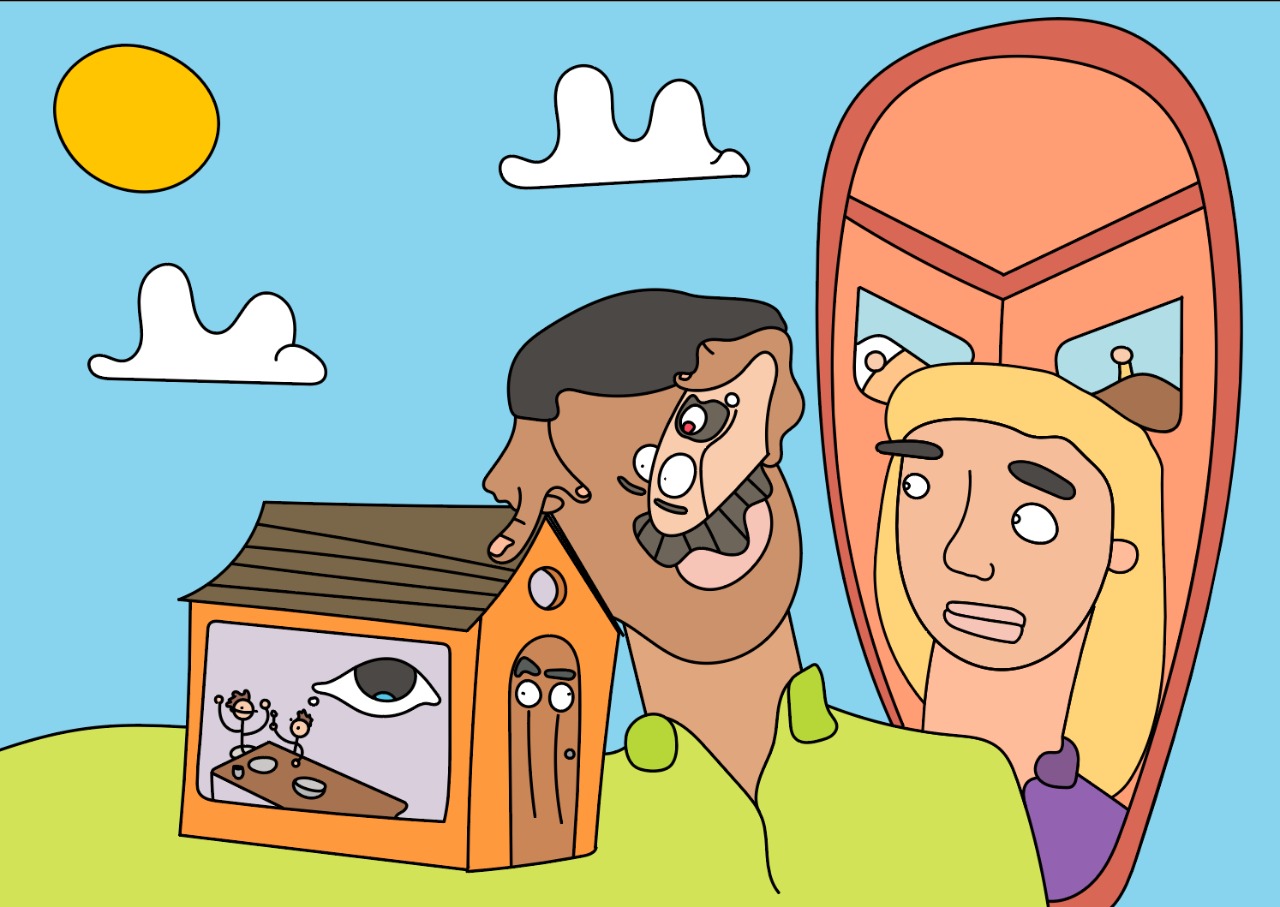
“So, what are we are going to cover in this one-hour webinar?” an attendee asked. The host, who happens to be the leader I admire a lot, responded, “It is not what we cover. It is what you discover.”
And… the attendee’s rectangular video frame dissolved into his well-groomed picture. Welcome to the virtual world — where we have the privilege to talk to the green dot on our screen and the power to switch off the video.
Something suddenly clicked on. Privilege? or a Prejudice?”
I will not give you another theory of pride, privilege, or prejudice, I promise. Let me tell you a story. Not once upon a time story of holocaust survivors, but how the old war tale is redefined by holocaust survivors for the lessons needed today.
There is a museum of tolerance in Los Angeles. When you walk into the museum, you gather in a small group and wait for the guide. The guide directs everyone towards two doors through which one can enter the museum. On one door, it is marked as “prejudiced” and the other as “non-prejudiced,” and you can choose the entrance based on your feeling about yourself. Some intellectuals opted to enter the museum through “non-prejudiced.” Yes, you guessed it right! The “non-prejudiced” door was locked. None of us is free from prejudices.
You are Prejudiced! I am Prejudiced! We all are Prejudiced, and there is nothing wrong with it. Prejudices are our natural leanings. These create our unique perspectives and shape our being.
What makes one different from others is their observation of seemingly uncomplicated responses, like, accent we naturally like and the accent that gets on our mind, the skin tone of a person we walk first towards in a gathering.
Prejudices, it is well known, are most difficult to eradicate from the heart whose soil has never been loosened or fertilized by education: they grow there, firm as weeds among stones. ~ Charlotte Brontë
Most of us, and the child in us, want to be heard. So we sing a joyous song that could help us in vocation and life. We create these tunes to support our professional or personal goals and engage in positive affirmations intentionally. And here is where the tale gets exciting and sometimes dirty.
Leanings take power from us and start getting in our way when we stop listening to inside voices. Tuning in, unselfconsciously, may create an inner song that can impact one’s moral purity — a psychological state that results from viewing oneself as clean from an ethical standpoint. It can make us feel mean, selfish, and prejudiced. It can push us off the equilibrium subtly, leading to ignorance or arrogance.
Prejudice, a dirty word, and faith, a clean one, have something in common: both begin where reason ends. ~ Harper Lee
To “feel prejudiced,” one needs to have a level of self-awareness. But having the power to switch on the light and not act on its discoveries is like inventing something powerful and die protecting it. When we work on our prejudices, we also develop the capabilities to sense and respond to the developmental patterns in others.
The butterfly only can see other butterflies. The butterfly only can appreciate the process and pain that the caterpillar needs to go throw to become the butterfly. As a caterpillar, butterflies quite literally do not exist.
If you take one thing, I will offer that educating ourselves to gain awareness is good; practicing awareness is excellent, but the transformative power lies in embodying the discoveries.
The power lies in the integration. All invention and no integration makes Newton a dull boy.
What part of you — that you identified — you commit to integrating?